Winter Beach Camping at Doran Beach
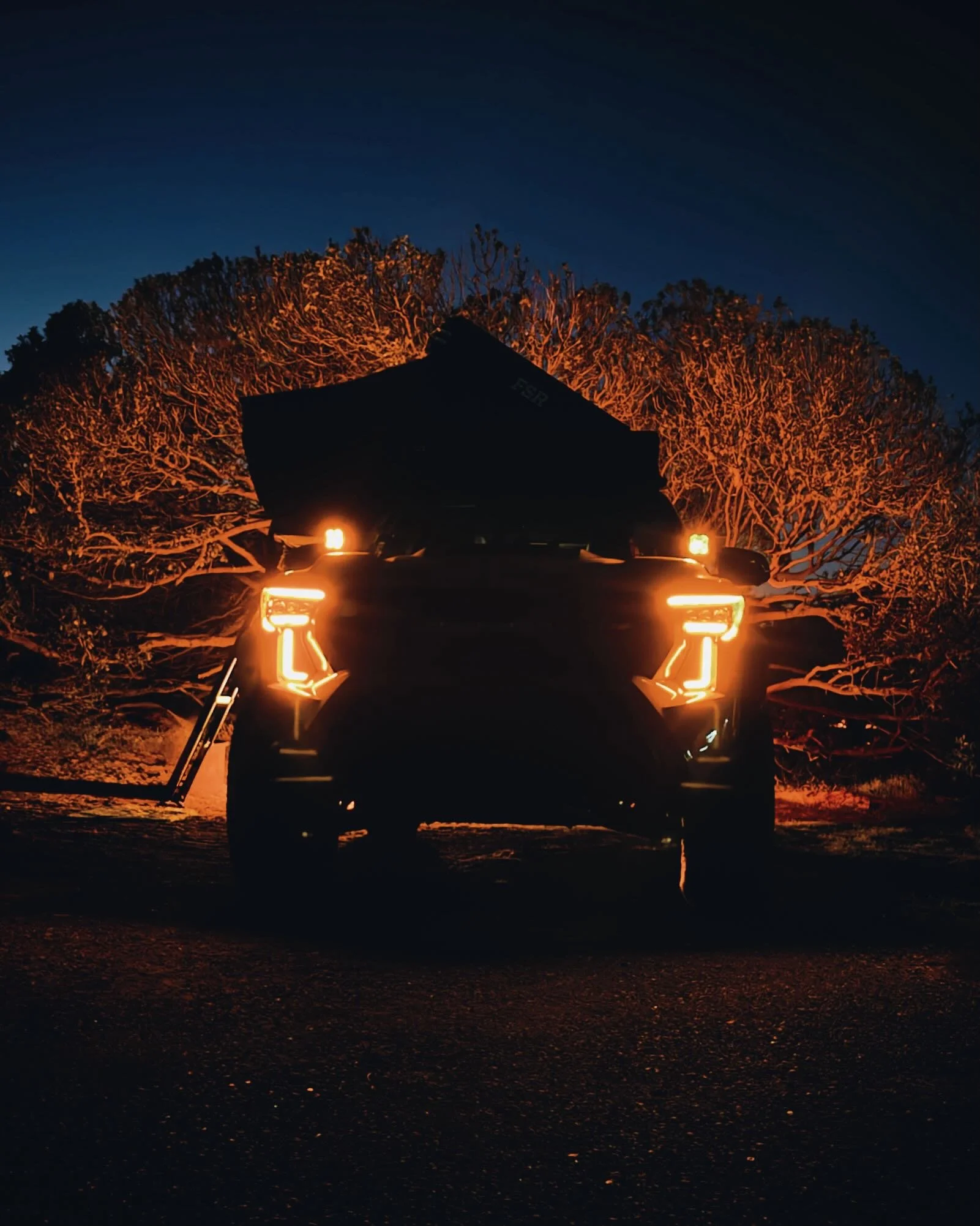
After the big Colorado trip, ~3000 miles, elevation, snow, and long highway days, I came home feeling good about the truck itself. That trip was a true mechanical shakedown. But this one?
This was different.
This was the first real camping shakedown.
The gear. The systems. The flow.
And winter beach camping is about as honest a test as you can ask for.
For that reason, I chose a place I know well: Doran Beach.
Tried, true, and familiar. A spot where I could focus on how the setup performed rather than learning a new environment at the same time.
Arrival & Setup
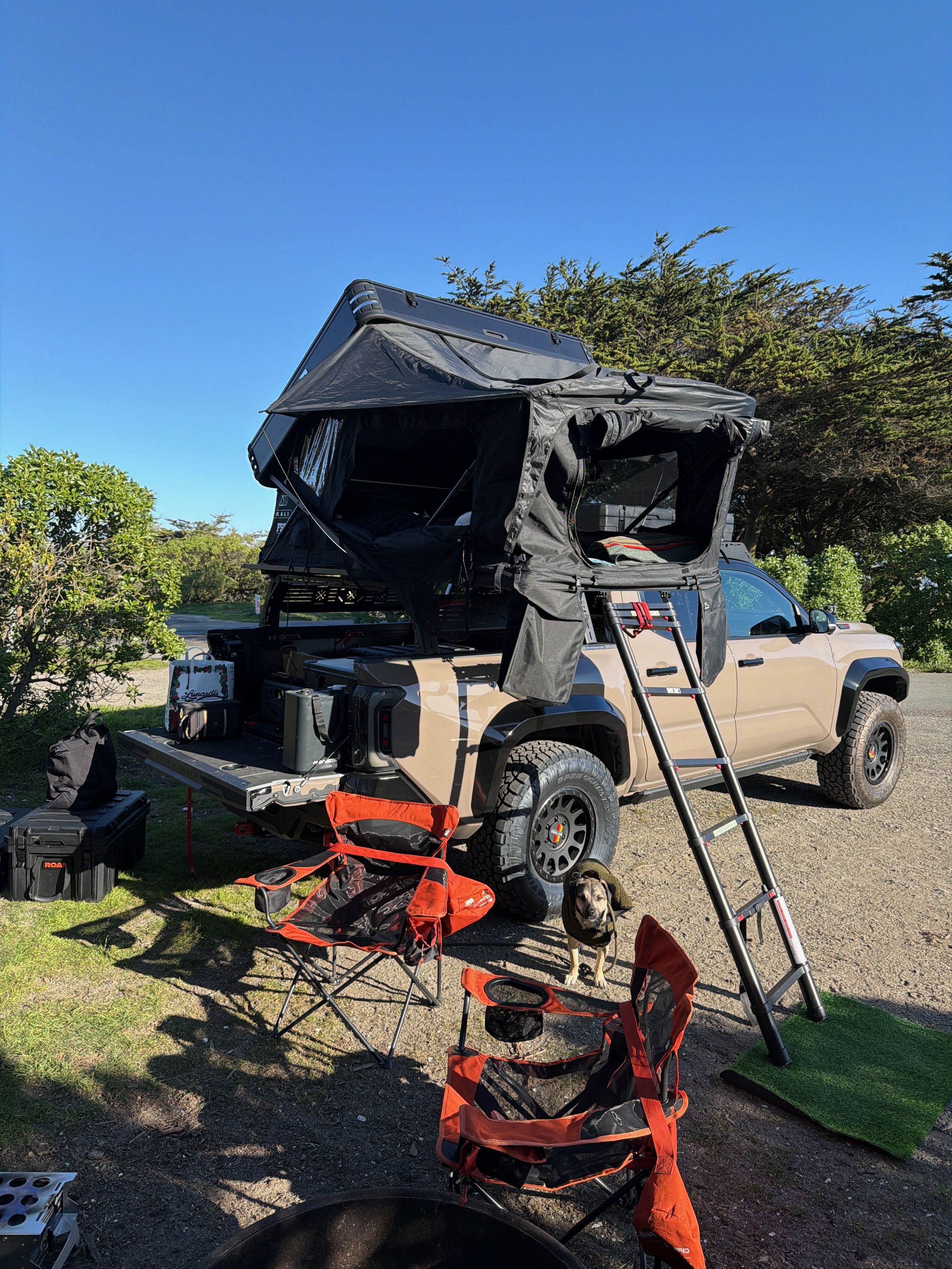
We rolled in mid-day on Thursday. Before heading to camp, I topped off fuel and grabbed fresh clam chowder for dinner, a small ritual that just feels right when you’re camping by the ocean.
Once we got to camp, it was straight into setup mode. Tent up, cases opened, gear laid out, and the site slowly coming together. There’s always that moment on a first trip where everything feels slightly inefficient, and that’s exactly the point of a shakedown.
Fire, Wind, and Staying Warm
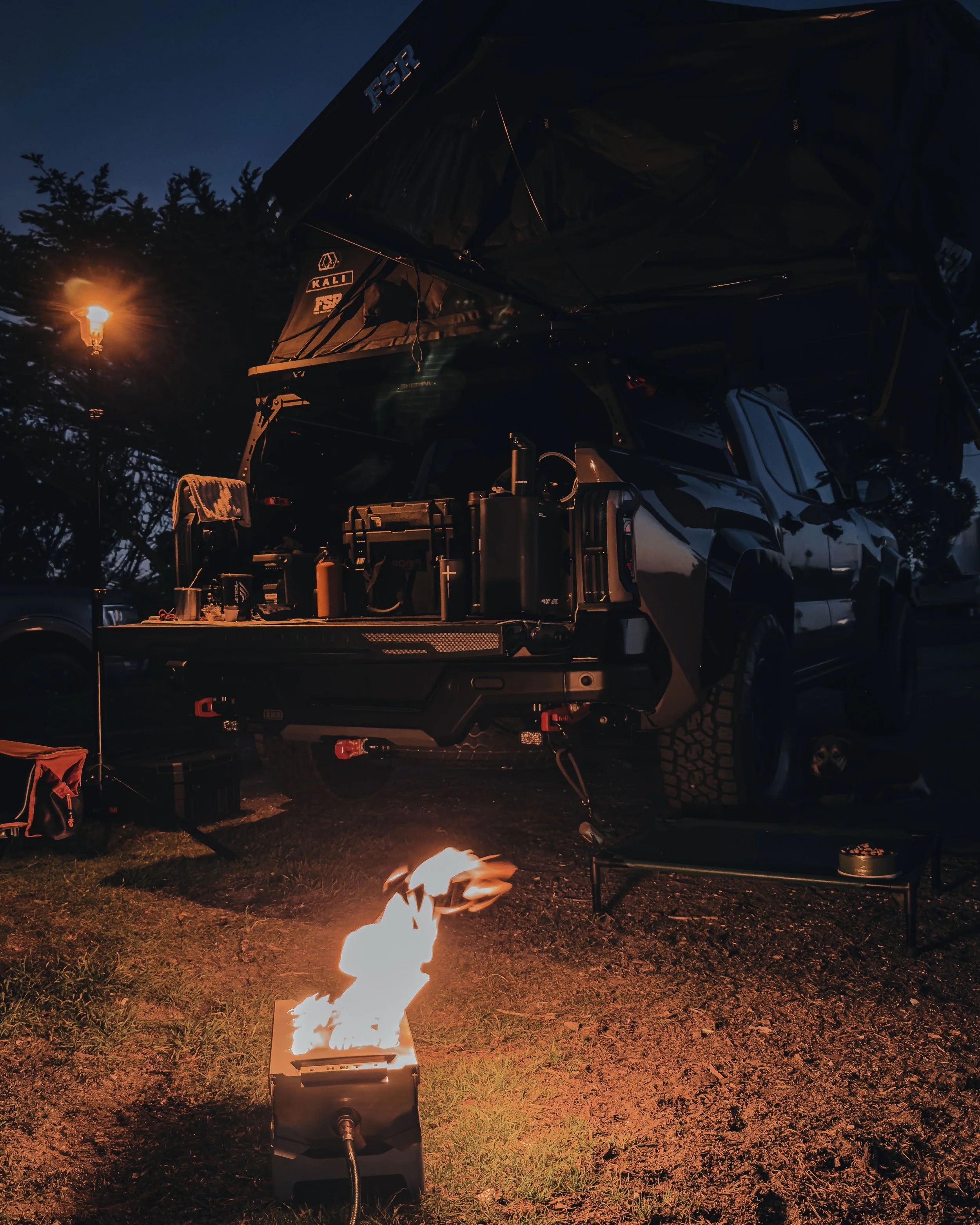
One of the highlights of this trip was finally putting the Howl R1 to work in real conditions.
That thing is a beast.
It burned hot, consistent, and efficient . As temperatures dropped from the mid-50s into the low-40s at night, it kept both Louis and me warm and comfortable. There’s something deeply satisfying about reliable heat when you’re camping in winter, especially with coastal moisture in the air.
What we didn’t anticipate was the wind.
The forecast called for 5–7 mph. Reality was closer to 17–20 mph.
Even with the gusts, the tent held up beautifully. Inside, we stayed warm thanks to a 12v heated blanket, which honestly felt like cheating in the best possible way.
Iceco APL 35 — Sponsor Highlight
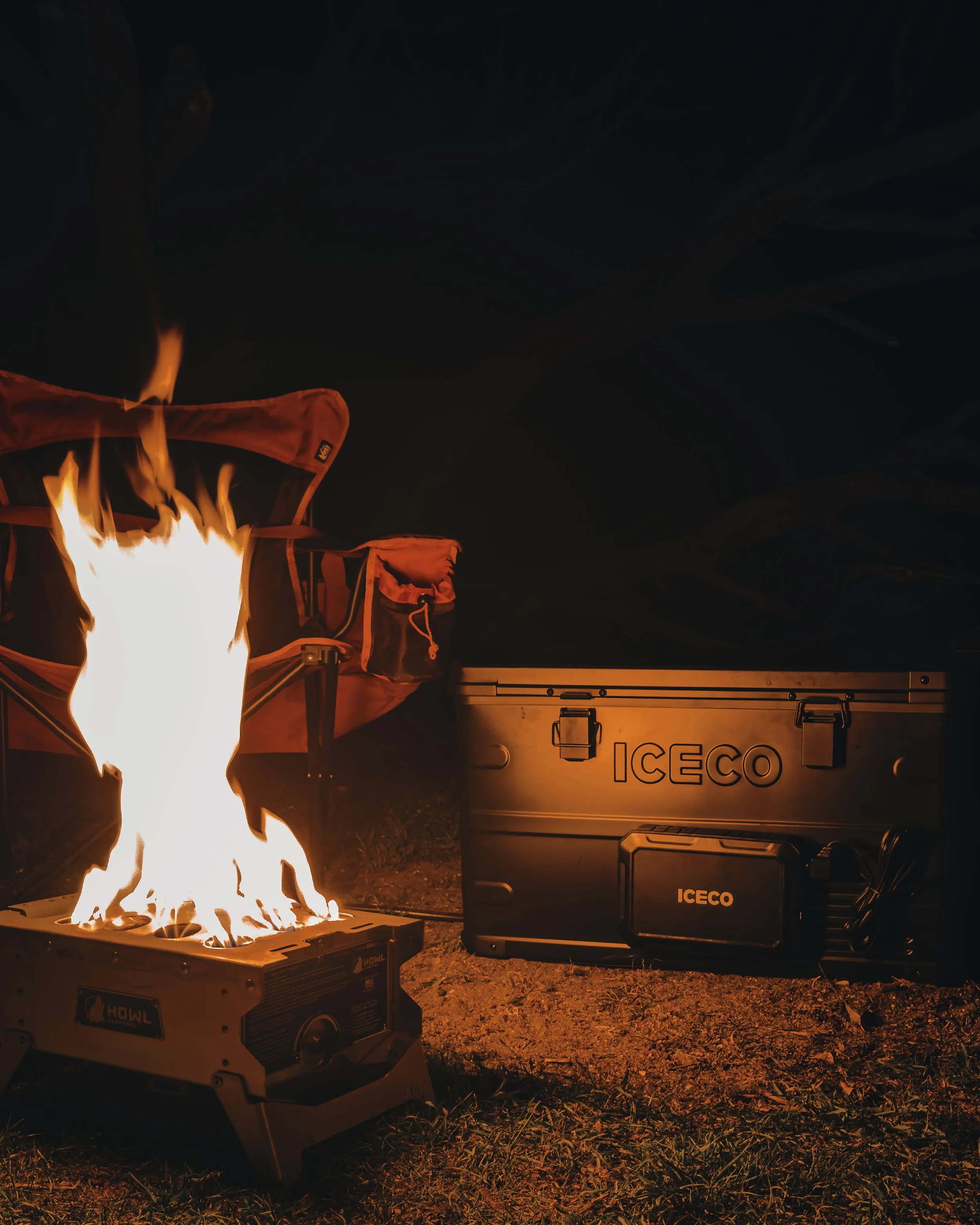
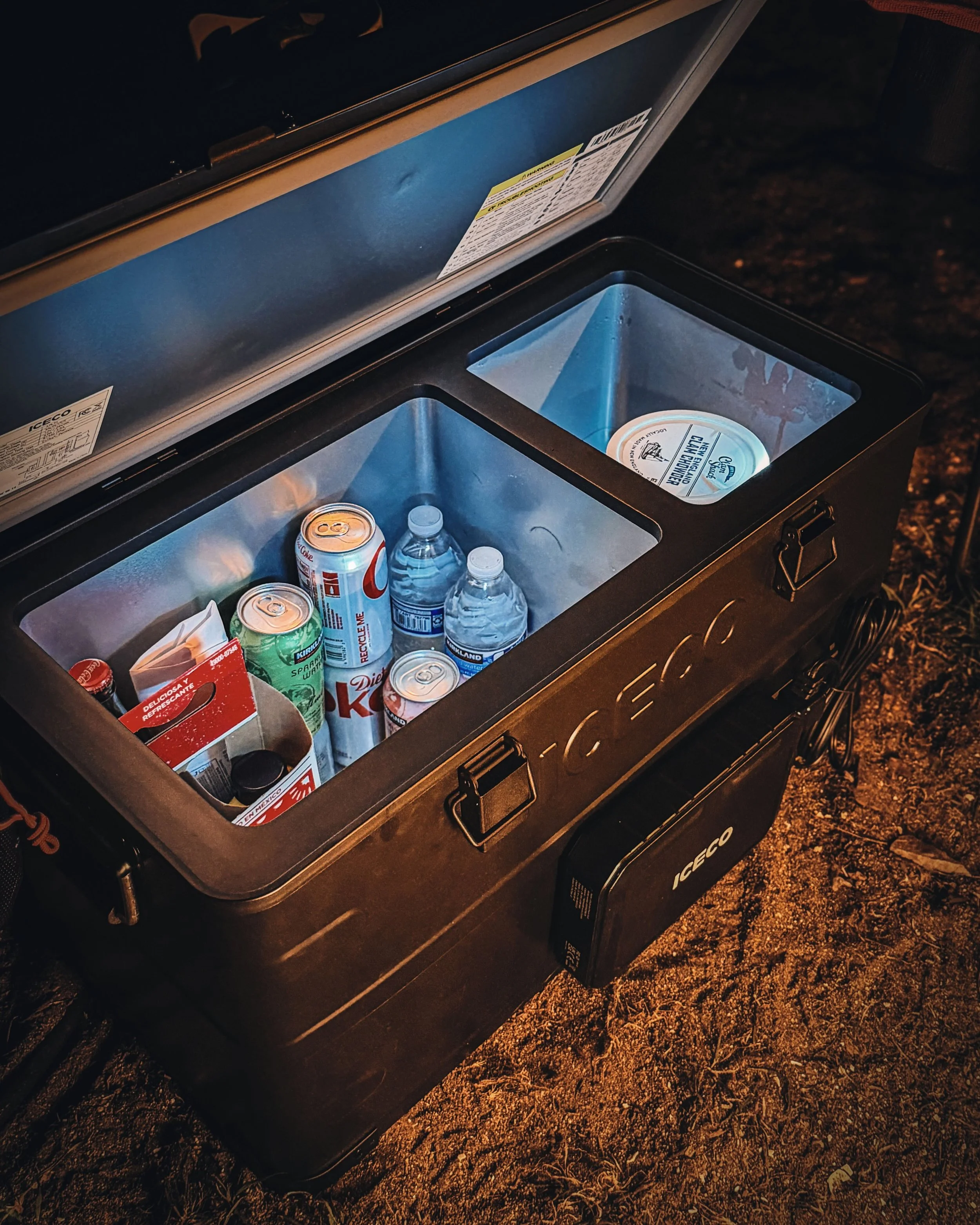
This trip really reinforced how important reliable cold storage is, especially when you’re off-grid for multiple nights and don’t want to think about ice runs, soggy food, or power anxiety.
The ICECO APL 35 performed flawlessly. It kept all of our food cold for two full days straight, running directly off the power bank without issue. No ice. No waterlogged packaging. No temperature swings. I set it, forgot about it, and trusted that everything inside would be exactly how I left it.
What really sets ICECO apart is the compressor they use. ICECO fridges are built around high-efficiency, variable-speed compressors (the same class of compressors trusted in marine and overland environments). They’re designed to cool quickly, hold temperature consistently, and do it while drawing very little power. That means fewer battery drain spikes, quieter operation, and better performance when ambient temps change, like cold coastal nights followed by sunny afternoons.
Another thing I appreciate is how well these fridges handle real-world use. Rough roads, constant opening and closing, uneven ground, none of it fazed the APL 35. It just worked. That kind of reliability matters when you’re camping for multiple days and food isn’t something you want to gamble on.
Yes, it’s a premium fridge.
But after trips like this, I genuinely see it as an investment—not just in better gear, but in peace of mind. If you camp regularly, travel off-grid, or want a fridge you don’t have to babysit, this is the kind of upgrade that changes the experience.
If you’re considering one, I do have a discount code that helps soften the price a bit. I only put my name behind gear I actually use, trust, and rely on in real conditions.
Code: ZEKESVIEW12 — 12% off
👉 https://icecofreezer.com/ZEKESVIEW12
Night Two & Settling In
Night two was far more pleasant. Winds calmed down, temperatures stabilized, and everything continued to perform exactly as hoped. That’s when you really start to relax, when the gear fades into the background and you can just be.
Ocean sounds, a warm fire, a happy dog, and zero regrets.
Initial Shakedown Notes
No first trip is complete without a growing list of improvements:
Power: I’ll likely need a larger power bank. The DJI Power 1000 dropped to about 50% just from running the heated blanket on 12v.
A quick 45-minute truck run got it back to ~75%, and solar topped it off, but if it were cloudy, I’d be in trouble.Water: Time to finally install my water system.
Tools: My kit is still built for van life. I need Tacoma-specific tools.
Mostly a 10mm deep socket, because I’m convinced you can disassemble 75% of this truck with one.Moisture control: Silica packets are a must.
Comfort: Forgot my camp slippers. Rookie mistake.
Tent efficiency: I think I can pack the tent with about 50% fewer guy lines, which will simplify breakdown and storage.
Camp kitchen: This needs real work, but I have a vision, so I’m not worried.
Looking Ahead
Now it’s time to retool a bit.
Work through the challenges. Dial the systems. Improve the flow.
This is a big shift from van life, and I have zero regrets.
The truck brings a different pace, a different setup, and a different kind of freedom. And trips like this remind me why I love the process just as much as the destination.
Winter beach camping?
Consider this first round a success.
Onward to the next adventure.