Wired Right: Why I Chose Blaze Off Road for My Entire Build
There's a certain pride that comes with doing things yourself.
Ask anyone in the overlanding world and they'll tell you the same thing. Half the fun is the build. Figuring it out. Making it work. And wiring? For most of us, that falls squarely into the "figure it out" category.
I've been there. I know the look of a center console with a rats nest of wires, zip-tied to something that was never meant to hold wires, running through a hole you drilled yourself because there was no other option. It works. Technically. But it's not clean. And if something goes wrong on trail, miles from pavement, you're going to feel every one of those shortcuts.
When it came time to wire up the lighting on this Tacoma — and I mean all of it — I decided to do it differently.
That's where Blaze Off Road came in — and honestly, they touched every single light on this truck.
The Problem Nobody Talks About
Here's the thing about aftermarket lighting: the lights get all the attention. The harness never does.
You spend hours researching pods, comparing lumen output, debating color temps, reading forums at midnight. Then the package arrives and somewhere in the box is a universal wiring harness that technically works with everything and is perfectly optimized for nothing.
I talked to Mitchell at Blaze Off Road about this exact frustration, and he summed it up better than I could:
"The lighting manufacturers are in a hard spot with harnesses. They're expected to provide something that works for everyone... They need one SKU to work with virtually everything, and we get to build application-specific."
That's the core of it. One universal harness forces compromises. You end up cutting it, splicing it, running wires through your firewall, and drilling a hole in your dash for a switch. And if you've ever done that, you know it never looks right. It never feels right. And if something goes wrong, it's a nightmare to trace.
Blaze builds harnesses for specific vehicles and specific setups. Tacoma with ditch lights? There's a harness for that. Ranger with a light bar? There's a harness for that too. The dimensions are dialed in. The connectors are right. You're not adapting anything.
The Full Lighting System — All of It
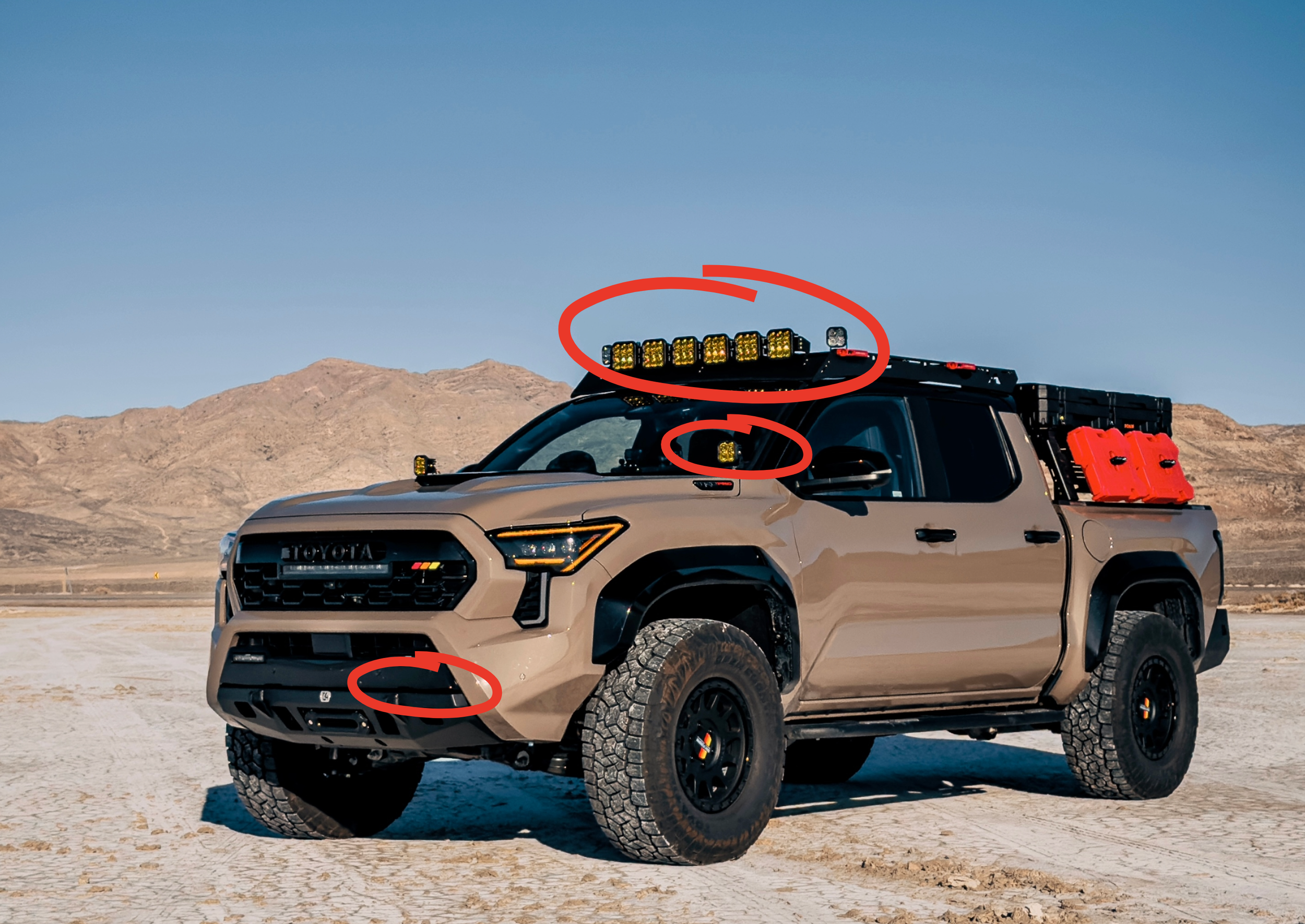
Here's the actual scope of what Blaze Off Road handled on this build. Because it wasn't just one light.
Hybrid Tacoma Complete Power System 12V Relocation
Diode Dynamics SS3 Pro ditch lights
Diode Dynamics SS3 Sport on the roof
Diode Dynamics SS5 Pro CrossLink on the roof
Diode Dynamics C2 Pro in the bumper
Rock lights — still in the queue, but already planned for
Every single one of those runs a Blaze Off Road harness. Application-specific. Tacoma-specific. No cutting, no splicing, no universal harness hacks.
That's not a coincidence. After the first install, I wasn't going back.
Seven Minutes
For Real
It’s easy to be skeptical about how clean and quick the process could actually be. So I documented it. Vlog 021. Single take. No edits to hide the time.
Under seven minutes from start to finish.
That's the full SS3 ditch light wiring install — wired up and done before most people have finished reading the instructions on a generic harness. And the ditch lights aren't even the most complex setup on this truck.
The whole experience drove home something Mitchell told me about the philosophy behind every product they build:
"Everyone thinks they hate wiring. The truth is, you don't hate wiring — you hate not knowing what to do, you hate there not being good resources or information, and you hate not having the right tools for the job."
He's right. The Blaze harness didn't just save me time. It removed the part that makes wiring feel hard. Everything was labeled. The routing made sense. There was nothing to figure out because it had already been figured out — for my truck, for my lights, for my specific setup.
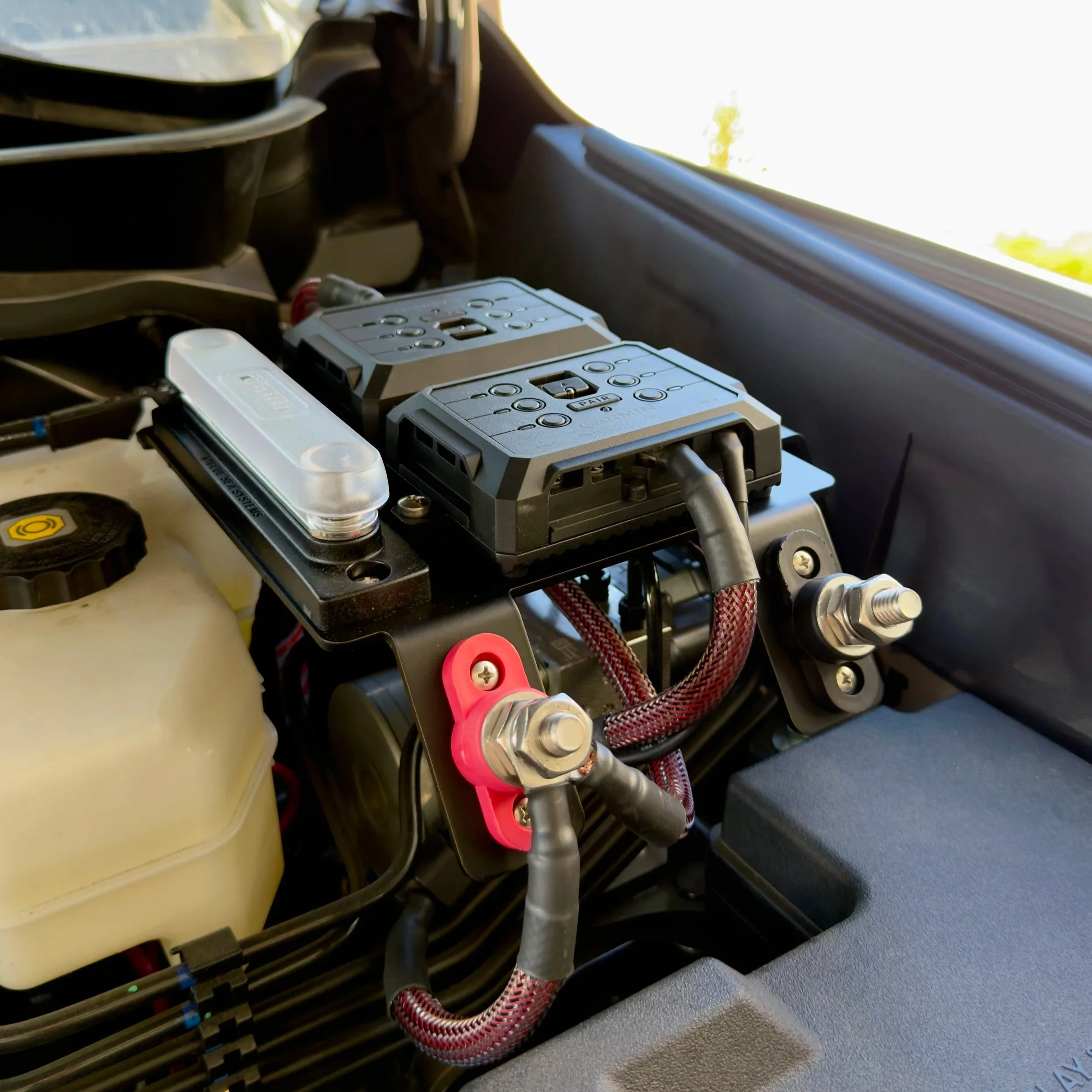
The Foundation: 12V Relocation Kit + Garmin Switches
Running that many lights means you need a wiring foundation that can actually support it. Adding in that our truck is a Hybrid model which means our battery isn’t under the hood like other trims. It’s under the rear seat.
I paired the Blaze harnesses with the Blaze Off Road 12V relocation kit and two Garmin power switches. The relocation kit is one of those things that doesn't sound exciting until it's installed and you look at your electrical setup and think — okay, that's actually clean.
Everything has a home. Everything is intentional. No splicing into random fuse slots hoping for the best. No zip ties holding together things that shouldn't be zip tied together.
For a build like this one, where more gear is always coming, having a solid electrical foundation early matters. You don't want to be five accessories deep, staring at your fuse box, realizing you've painted yourself into a corner.
The Blaze setup gives you room to grow without starting over. And with rock lights still on the install list, I'm glad I built it this way from the start.
Why Quality Actually Matters Out Here
This part matters more than most people realize, and Mitchell made a point I haven't been able to shake since I read it.
Blaze builds their harnesses from aerospace-grade components because the stakes in an overlanding environment are genuinely high. He put it plainly:
"If your electrical system were to fail, hours from the nearest paved road, what would that look like?... That vehicle is your food, your shelter, your water, your communication, your transportation. Every need you have to survive is in or on that vehicle."
That's not marketing copy. That's an honest description of what a rig means to the people running it in the backcountry.
Over 200,000 vehicle fires a year in the US are caused by faulty aftermarket products or installations. I grew up around the fire service — that number doesn't land lightly for me. Neither does the idea of a shoddy ground connection starting a fire in dry brush somewhere in the Eastern Sierra.
Quality wiring isn't a premium. It's a baseline.
Would I Recommend It?
Without hesitation. I didn't just use Blaze Off Road for one light. I trusted them with the entire electrical system on this build. Every light, every harness, the full foundation. That's not something I say lightly, and it's not something that happened by accident. It happened because the first install went so well that going anywhere else didn't make sense.
If you're running Diode Dynamics lights — or honestly any quality aftermarket lighting — and you've been putting off the install because wiring feels like a project, the Blaze Off Road harness removes that excuse. The application-specific fit, the quality components, the dead-simple process, it's one of the highest-value decisions I've made on this build.
Start with the right harness. Build the right foundation. And if you want to see what the install actually looks like, Vlog 021 is posted on our Youtube channel. One take, no cuts, under seven minutes. See for yourself.